Home About
About
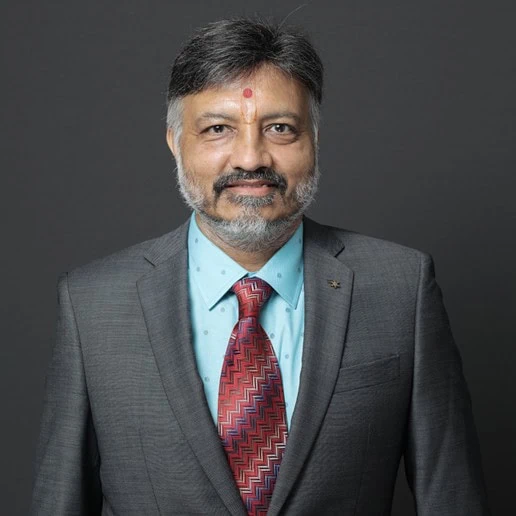
Sanjay Ajmera
Whole-Time Director of Ajmera Realty & Infra India Ltd., and a member of the Ajmera Group for almost thirty-one years. This page sets out what is on the record: the role, the remit, the regions and the working manner colleagues describe.
i Biography
Sanjay C. Ajmera has been actively involved in the Ajmera Group for almost thirty-one years. He serves as a Whole-Time Director of Ajmera Realty & Infra India Ltd., the Group’s listed entity, and his responsibilities sit at the practical end of real estate development rather than in the public-facing part of the business.
He is well associated with business development and works in liaison with government and municipal authorities. He plays a leading role in the development and construction of projects in Pune, and is also associated with redevelopment projects undertaken by the Group. The company’s own board profile records that his practical approach and pleasing personality have contributed to the success of various prestigious projects all over India.
Read plainly, that description says something specific about the shape of the work. Business development and statutory liaison are the two ends of a project’s life that never make a brochure: one decides whether a project should exist, the other decides whether it can. Both are relationship-heavy, both are slow, and both are judged years later, by whether what was promised was delivered.
The Pune remit gives that work a geography. The Ajmera Group’s association with the city goes back to its early years, when work began on the Ajmera Housing Complex at Pimpri, spanning some 100,000 square feet — the project the Group itself describes as its first big break. Three decades of a single director’s attention to the same city is not a posting; it is an accumulation of ground knowledge, local relationships and institutional memory that cannot be transferred quickly.
The redevelopment association points at the hardest category of work in Indian urban real estate. Redevelopment happens on sites that are already occupied, already governed by an existing society, and already full of people with a stake in the outcome. It is the segment in which a “practical approach” and the ability to be dealt with easily stop being pleasantries and become the actual competence.
ii In brief
The record, without embellishment.
- Full name
- Mr. Sanjay C. Ajmera
- Designation
- Whole-Time Director (WTD)
- Company
- Ajmera Realty & Infra India Ltd.
- Group
- Ajmera Group, founded 1968
- Tenure
- Almost 31 years with the Group
- Functions
- Business development; liaison with government and municipal authorities
- Project focus
- Development and construction of projects in Pune
- Also associated with
- Redevelopment projects undertaken by the Group
- Source
- Board of Directors profile published by Ajmera Realty & Infra India Ltd.
iii Working manner
Three habits
the record
points to.
-
01
Stay upstream
Business development and approvals are decided before a hoarding goes up. A director working there spends most of his time on questions that have no visible output for months, and whose value only appears when a project runs to programme.
-
02
Stay in one place long enough to be known
Municipal liaison is not a transferable skill in the abstract; it is specific to a city, its departments and its history. A sustained Pune remit is what makes that knowledge worth anything.
-
03
Be easy to deal with
The company’s own words are “practical approach and pleasing personality”. In redevelopment especially, being straightforward with residents, officials and contractors is not decoration around the work — it is the mechanism by which the work advances.
iv The house he works in
A family group that became a listed company.
The Ajmera Group was founded in 1968, its groundwork laid by Shri Chhotalal S. Ajmera — known as Chhotubhai — who established its headquarters in Manish Nagar, Andheri, Mumbai. After a decade of work, the Group’s decisive turn came in 1975, when it chose to focus on the mid and budget residential segment rather than the conventional path of the time.
From that base the Group built at scale: Asia’s first township of its kind at Shanti Nagar, Mira Road, with 1,500 buildings and 17,000 flats across 265 acres; 1.7 million square feet at Shastri Nagar, Andheri West in 1988; Bhakti Park at Wadala from 1996; Ajmera Infinity in Bengaluru in 2006; and, more recently, the high-rise work at Ajmera i-Land in Wadala. Today the Group describes a presence across six cities and two countries, and more than fifty-eight years of work.
- Founded
- 1968
- Founder
- Shri Chhotalal S. Ajmera
- Headquarters
- Manish Nagar, Andheri, Mumbai
- Turning point
- 1975 — mid and budget housing
- Footprint
- Six cities, two countries